

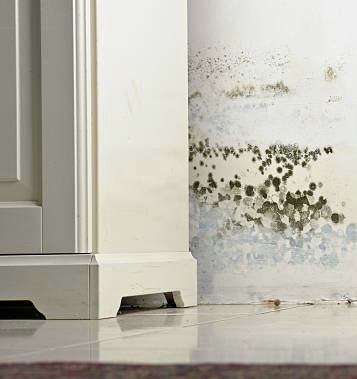
Mould forming behind wardrobes or large furniture is one of the clearest signs of trapped moisture. It often surprises people because the rest of the room can look fine.
This pattern is strongly linked to condensation, but it’s still worth checking against a condensation diagnosis so you don’t miss a wider issue. For the broader context of how this fits into other common patterns, see condensation problems in UK homes.
What’s actually happening
External walls are colder than internal ones. When large furniture sits tight against them, airflow is restricted and warm room air can’t circulate properly.
Moisture condenses on the colder wall surface behind the furniture and stays there because it can’t evaporate easily. Over time, mould develops in that hidden space. This is the same basic mechanism seen with condensation and mould in corners and ceiling edges, just in a more concealed location.
Why this keeps coming back
Cleaning the visible mould doesn’t change the cold surface or the lack of airflow. As soon as moisture builds up again, condensation returns behind the furniture, often before it’s noticed.
What usually helps first
The least disruptive change is improving airflow. Pulling furniture slightly away from external walls, keeping the room consistently warm, and reducing overall moisture in the home often make a noticeable difference.
When to investigate further
If walls feel wet rather than just cool, or if mould spreads beyond furniture zones, it’s worth checking whether moisture is entering from outside rather than condensing from the air.
In most cases, mould behind furniture reflects cold surfaces and trapped air, not a hidden leak. For a broader explanation of how condensation, mould, and damp relate to one another, the condensation, mould and damp guide puts this pattern into wider context.