

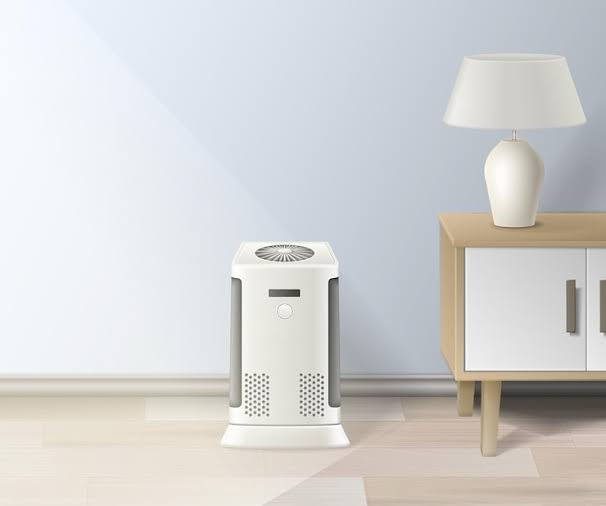
Before relying on a dehumidifier as a solution, it helps to understand how condensation behaves across a home and how that compares with the patterns set out in a condensation diagnosis.
What a dehumidifier actually does
A dehumidifier removes moisture from the air in the room it’s placed in. By lowering indoor humidity, it reduces the amount of water available to condense on cold surfaces.
This can be effective where excess moisture is the main driver, such as after cooking, showering, or drying clothes indoors. In these cases, visible condensation and mould growth may reduce while the unit is running.
Why dehumidifiers don’t always solve condensation
Condensation isn’t just about how much moisture is in the air — it’s also about surface temperature. If walls, windows, or ceilings are cold enough, condensation can still form even at moderate humidity levels.
This is why some homes see only limited improvement. The dehumidifier lowers moisture in one space, but cold surfaces elsewhere still attract condensation once the unit is switched off.
Whole-house condensation and dehumidifiers
In homes where condensation appears across multiple rooms, a single dehumidifier often treats symptoms locally rather than systemically. Moisture continues to move through the property, especially overnight.
This pattern is common in situations described in why the whole house feels damp, where accumulation and airflow matter more than one device.
Why dehumidifiers feel effective at first
Many people notice an immediate improvement because visible moisture reduces quickly. Windows may dry, and rooms can feel more comfortable.
However, if the underlying causes — such as cold surfaces, uneven heating, or limited ventilation — remain unchanged, condensation often returns when the unit isn’t running.
When dehumidifiers are most useful
Dehumidifiers work best as a support tool rather than a standalone fix. They can help manage moisture while longer-term changes are made, or in situations where ventilation improvements aren’t immediately possible.
Used alongside steadier heating and better airflow, they often perform far more reliably.
When they’re the wrong focus
If condensation keeps forming on the same cold surfaces, or mould returns despite low indoor humidity, attention usually needs to shift away from moisture removal alone.
In these cases, understanding how condensation, mould and damp interact across the property becomes more important. The condensation, mould and damp guide explains why surface temperature and airflow often matter more than appliances.
The realistic takeaway
Dehumidifiers can reduce condensation, but they don’t automatically fix it. Their effectiveness depends on whether moisture levels are the main cause or just part of a wider pattern.
Used thoughtfully, they can help. Used in isolation, they often delay proper diagnosis rather than replace it.